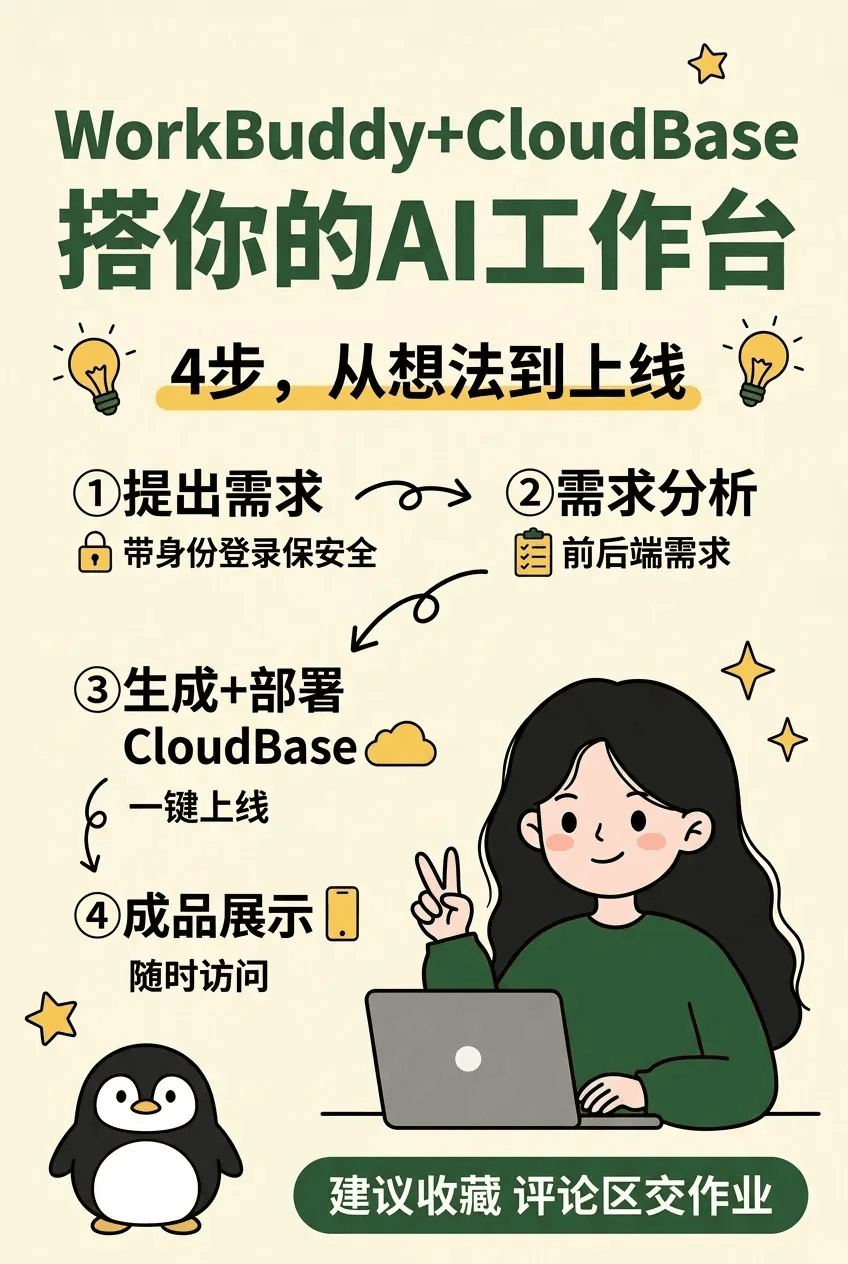

Yesterday, Tencent WorkBuddy released version 5.5.6, launching its full-stack "App" generation capability:
Describe what you want in a single sentence, and get a complete web application with a cloud database, file storage, and sign-in — no deployment required. Publish and you instantly get an access link.
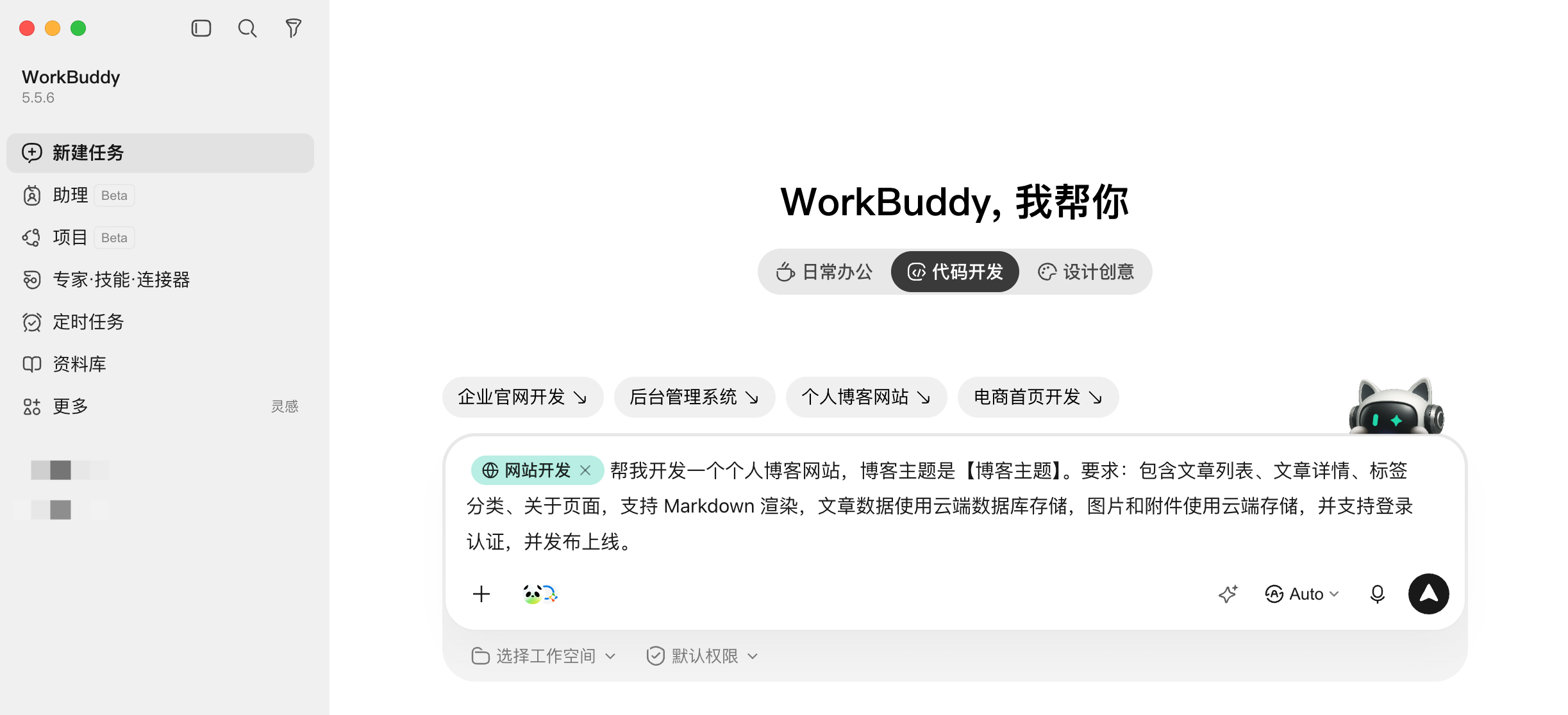
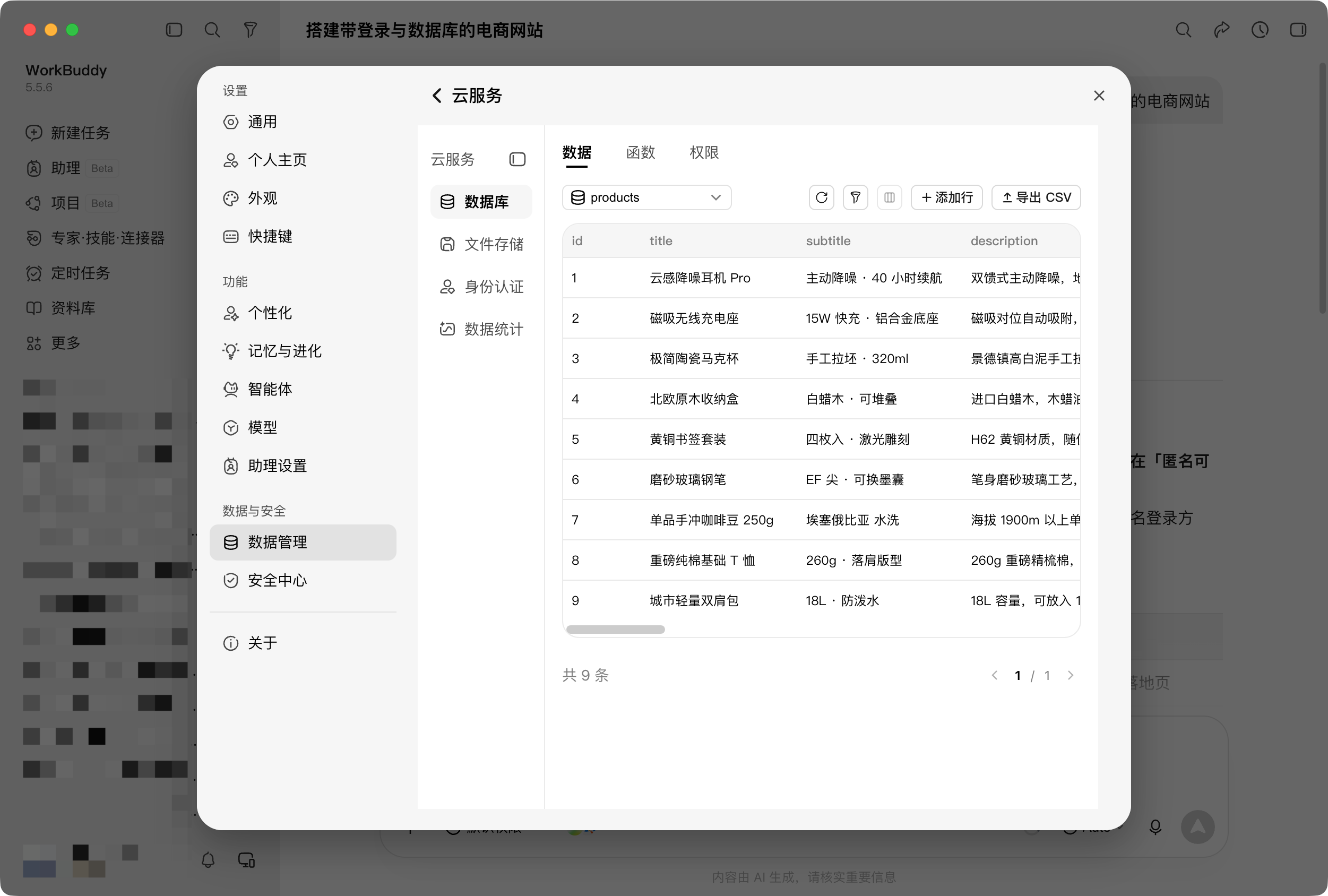
Every WorkBuddy app with cloud services enabled runs its backend in an isolated CloudBase environment. Users may never notice CloudBase, but their data, accounts, files, and access links are all carried by it.
WorkBuddy wants users to focus on needs and ideas without understanding any backend concepts; CloudBase wants the backend to be infrastructure that Agents can directly understand, operate, and maintain. Both goals point to the same question: when AI becomes the producer of software, what should an application's backend look like?
The Agent era needs new backend infrastructure
For the past decade, cloud infrastructure was designed around one premise: human engineers build a small number of applications and manually handle resource provisioning and operations. AI is now rapidly changing both ends of that premise:
- Developers are shifting from humans to Agents: AI has democratized technology and expanded the "developer" population — anyone can now generate applications through an Agent;
- App volume is shifting from few to massive: anyone, at any time, on any device, can direct an Agent to generate apps, dramatically increasing the number of applications.
These changes are not predictions — they are already visible in CloudBase's operational data: tens of thousands of apps are now created by various Agents on CloudBase every day; about one-third of all API calls on the platform come from Agents, and that share keeps growing.
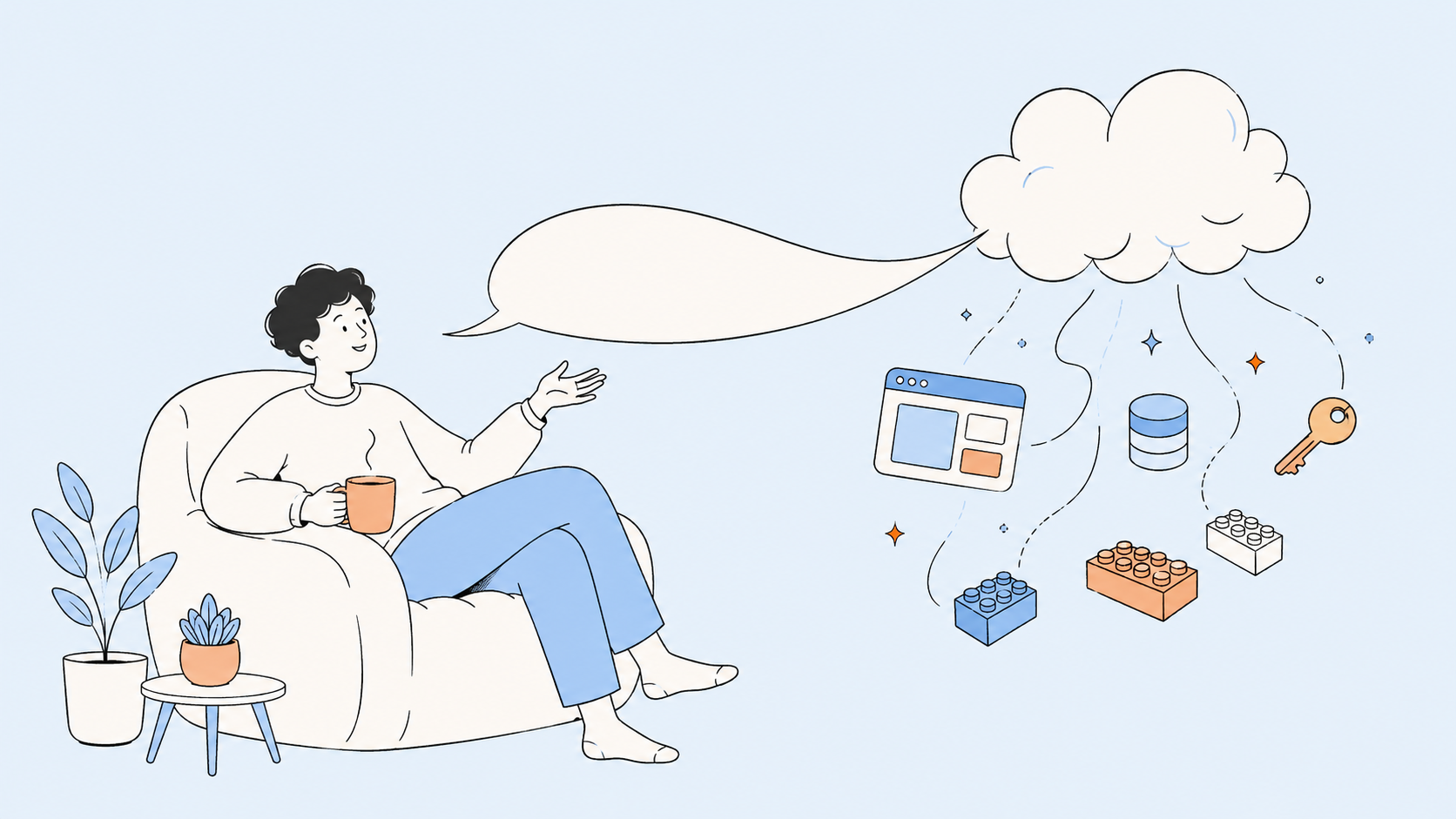
New requirements for app-development infrastructure follow:
- Near-zero development barrier — infrastructure must be invisible. Café owners, event operators, and pet owners are all building apps with AI. They should never see terms like "database", "authentication", or "RLS". Backend provisioning and operations must be fully taken over by Agents.
- Many apps with small individual load — supply cost must approach zero. Each user may create multiple apps, most of which are accessed infrequently. Backend services must be provisioned in bulk at near-zero marginal cost, with no waste when idle.
- Agents are the primary operators — every capability must be API-driven. Creating tables, writing permission rules, deploying, rolling back — all done by Agents. Every backend capability must be declarative and verifiable by Agents, with no hidden paths that "require a human to click something in the console".
Meeting these three requirements isn't about adding features to old architectures — it requires end-to-end automation across provisioning, isolation, metering, and reclamation.
WorkBuddy's "App generation" capability is the first complete implementation of this new infrastructure.
How WorkBuddy builds app backends on CloudBase
Every WorkBuddy app with cloud services enabled has an isolated CloudBase environment behind it — a complete production-grade backend:
- An isolated CloudBase environment: one app, one environment, with natural resource and data isolation and independent lifecycle management;
- PostgreSQL database: structured data stored in the cloud with support for transactions, complex SQL, and vector retrieval. Data permissions are explicitly defined as SQL via RLS policies, which Agents can read, write, and verify directly;
- Built-in authentication: sign-up and sign-in work out of the box, with data isolated per user;
- File storage and keyless AI calls: images and attachments go straight to the cloud, and LLM calls require no API key management of your own;
- Publish in seconds: build, deploy, and rollback are done via MCP, so a generated app gets an accessible HTTPS link within seconds.
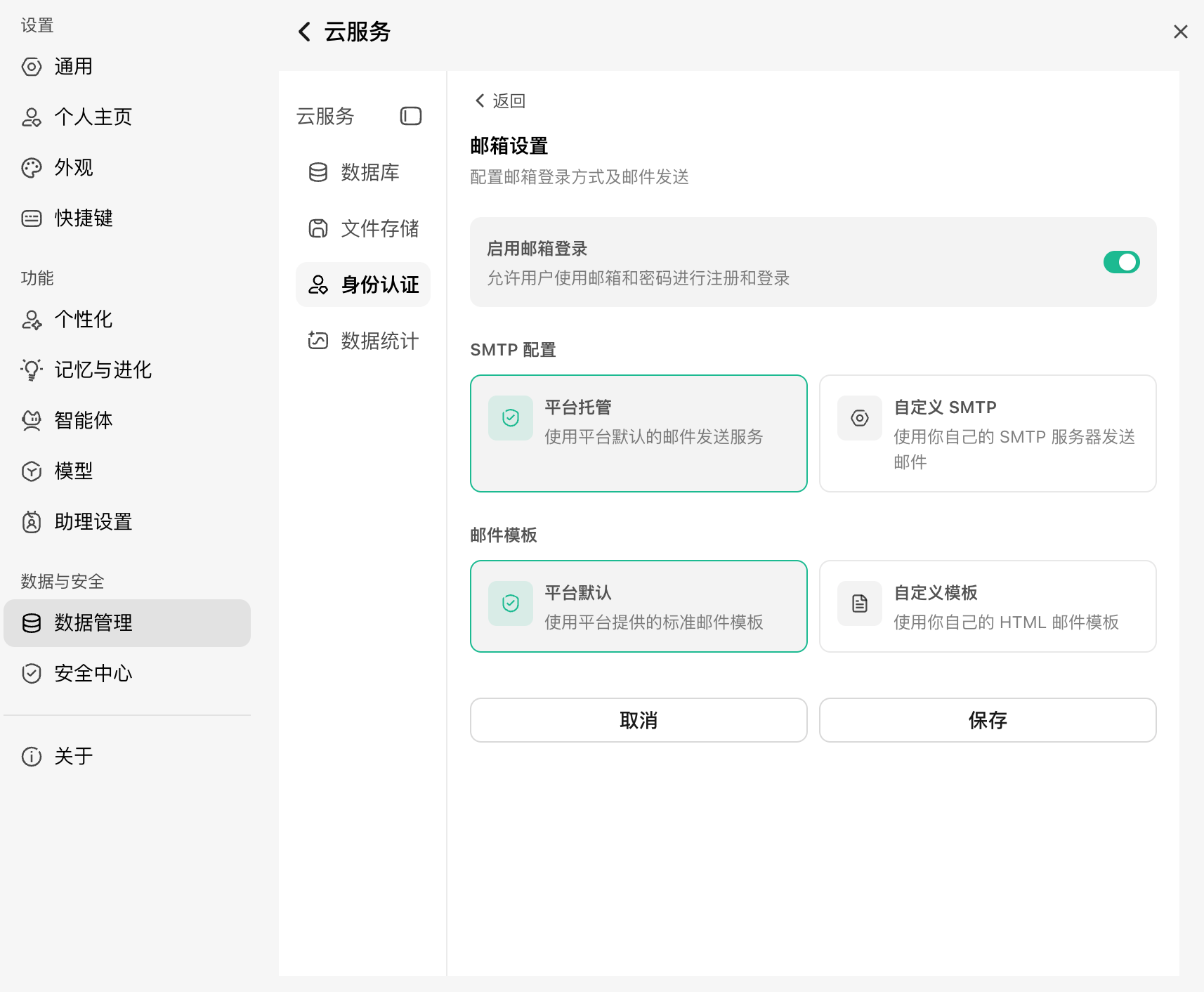
For WorkBuddy users, all of this is compressed into a single action: confirm enabling cloud services, and the app "has a backend". Where data lives, who can access it, how it goes live — all handled behind the scenes by WorkBuddy and CloudBase together.
The CloudBase platform integration solution: giving every platform its own backend cloud service
WorkBuddy's app-generation capability is built on the CloudBase platform integration solution — designed for any Vibe Coding platform:
1. Multi-tenant resource isolation
Platforms call CloudBase APIs to create and manage environments in bulk, one isolated environment per app, with natural resource and data isolation between environments.
For a platform, this means fully automated backend provisioning for every app with zero manual setup; an app with abnormal traffic or failures never affects other apps.
2. API Key-based permission scoping
Each environment is issued its own API Key. The user-side Agent holds the Key and connects directly to the environment to create databases and tables and deploy functions — no platform backend relay required.
The Key's permission boundary is the environment itself: an Agent holding a Key for one environment can only operate resources within it. Even if an Agent produces a faulty instruction, it cannot reach other users' environments. The platform's overall security boundary is guaranteed at the infrastructure layer, not by hoping Agents never make mistakes.
3. Resource metering
The integration plan converts all cloud resources — PostgreSQL, storage, functions — into a unified "resource points" unit. Platforms can query each environment's usage summary and per-module breakdown via API, knowing exactly how much each app consumes and where.
Resource points can become the metering unit for a platform's own commercial system. WorkBuddy's membership tiers are designed around resource points:
| Membership | Apps with cloud services | Resource points per app / month |
|---|---|---|
| Free | 10 | 5,000 |
| Standard | 30 | 25,000 |
| Premium | 50 | 50,000 |
| Flagship | 99 | 150,000 |
4. Flexible scaling and pay-as-you go
Each environment's PostgreSQL can be scaled up or down independently at any time, with upgrades taking effect immediately. Once over-limit pay-as-you-go is enabled, usage beyond the plan quota is automatically billed on demand without service interruption.
This lets a platform start at minimal cost: the vast majority of low-traffic apps run on shared PostgreSQL instances for cost efficiency; when one app suddenly takes off, just scale up its PostgreSQL — avoiding "the app crashed under heavy traffic" incidents.
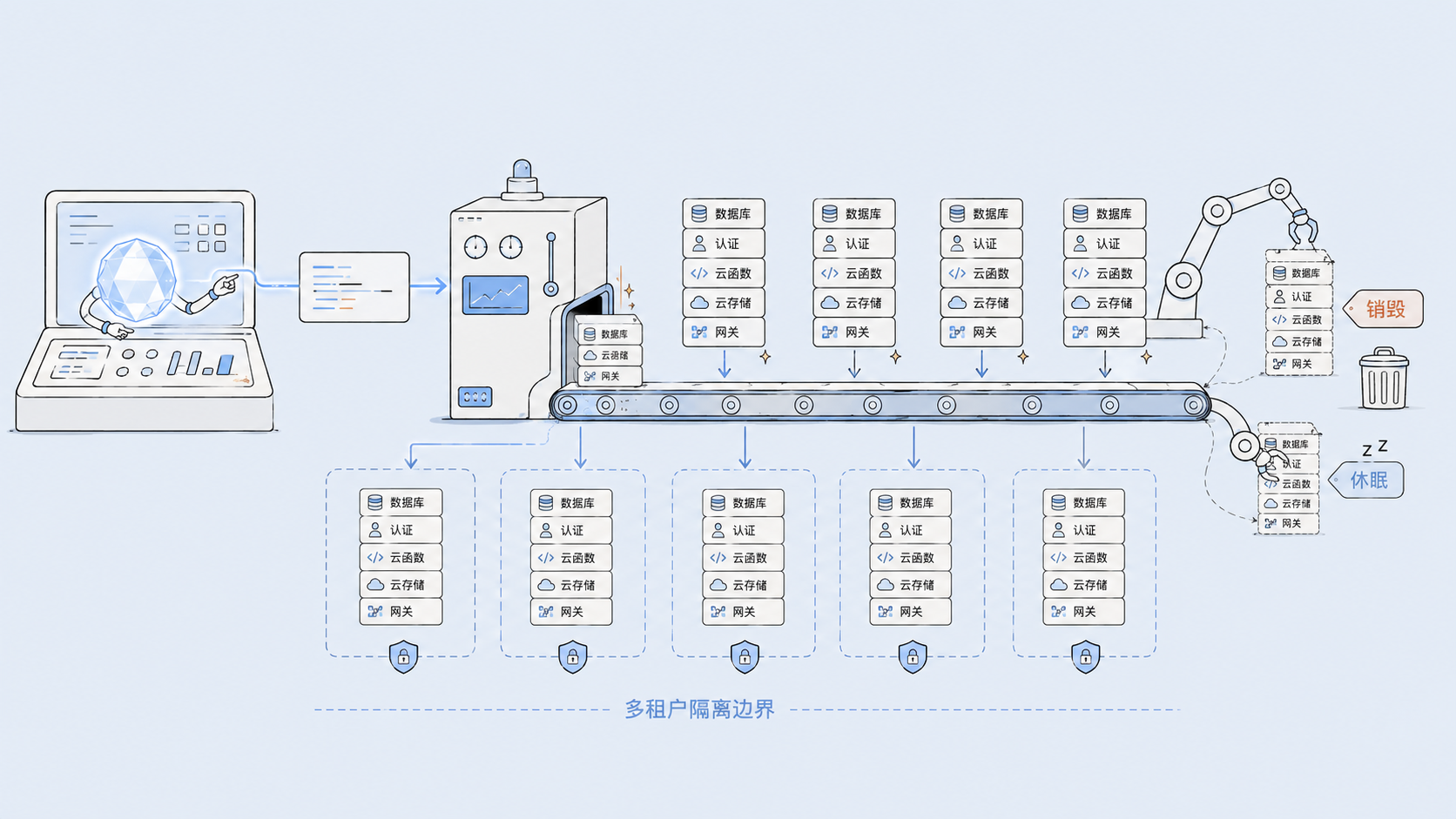
Beyond WorkBuddy, AI app-generation platforms such as Tencent Tusi (tusi.qq.com) also build their backends on CloudBase. The pattern is the same: when AI generates apps at a speed and scale beyond the boundary of manual operations, the backend infrastructure itself must be designed for Agents first.
Let AI handle the coding, let CloudBase handle the backend
If you are building a Vibe Coding product, an internal AI development platform, or any product that needs "a backend for every app", give CloudBase a try in your platform or product:
- Read the CloudBase platform integration documentation
- Learn about CloudBase for PostgreSQL
- Generate a full-stack app yourself with WorkBuddy and see what its backend looks like