
As AI and vibe coding lower the barrier to writing code, the engineering challenge is moving. When more creators and internal business teams can produce working code quickly, the stretch from "runs locally" to "publicly deliverable" becomes the new test for platform businesses.
At the Tencent Cloud Ecosystem Conference creator session, Zhihu shared how it relies on infrastructure-level cloud capabilities to publish and manage a massive long tail of AI-generated apps. For CloudBase, Zhihu is more than a content platform: it is a representative example of a business that deploys and hosts AI applications at scale.
The bottleneck is shifting from development to delivery
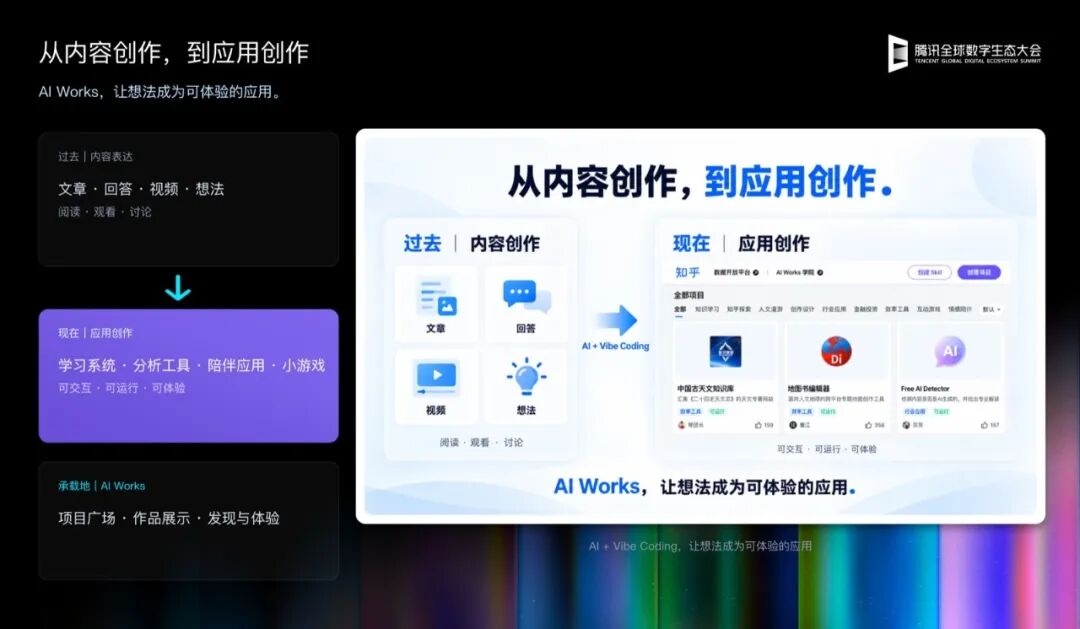
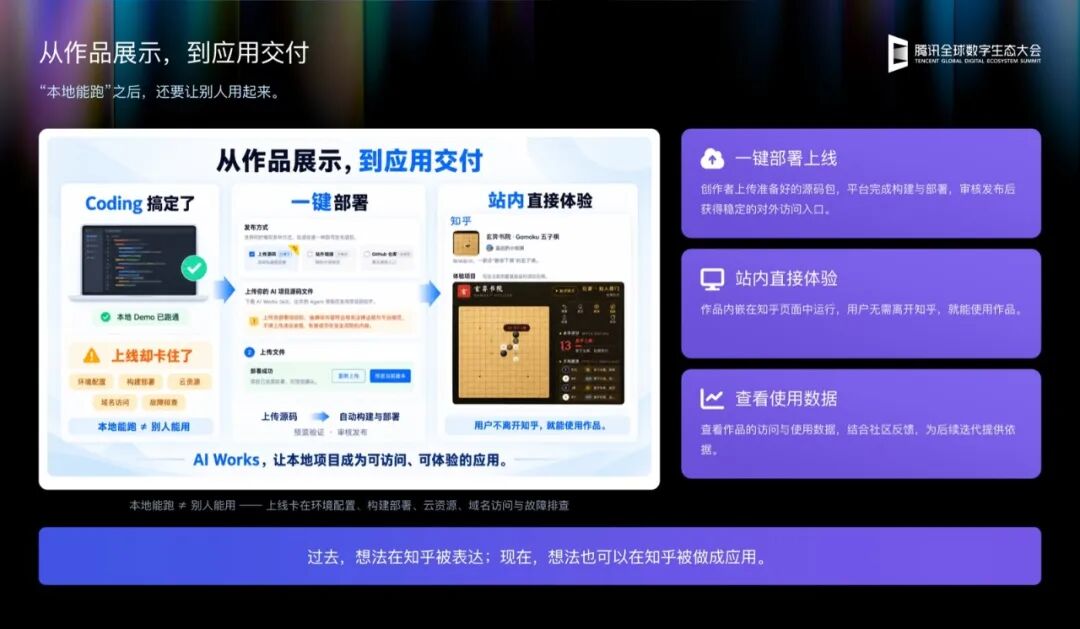
While working with AI-generated submissions, Zhihu found that many creators were no longer stuck on writing code — they were stuck on "it runs on my machine, but nobody else can use it." Environment setup, build and deployment, cloud resource provisioning, domain allocation and troubleshooting after development keep most creators without a technical background from ever shipping.
To get locally built projects online easily, Zhihu turned deployment and hosting into a business foundation and launched the AI Works project gallery. What users ultimately get is an app link they can try and share.
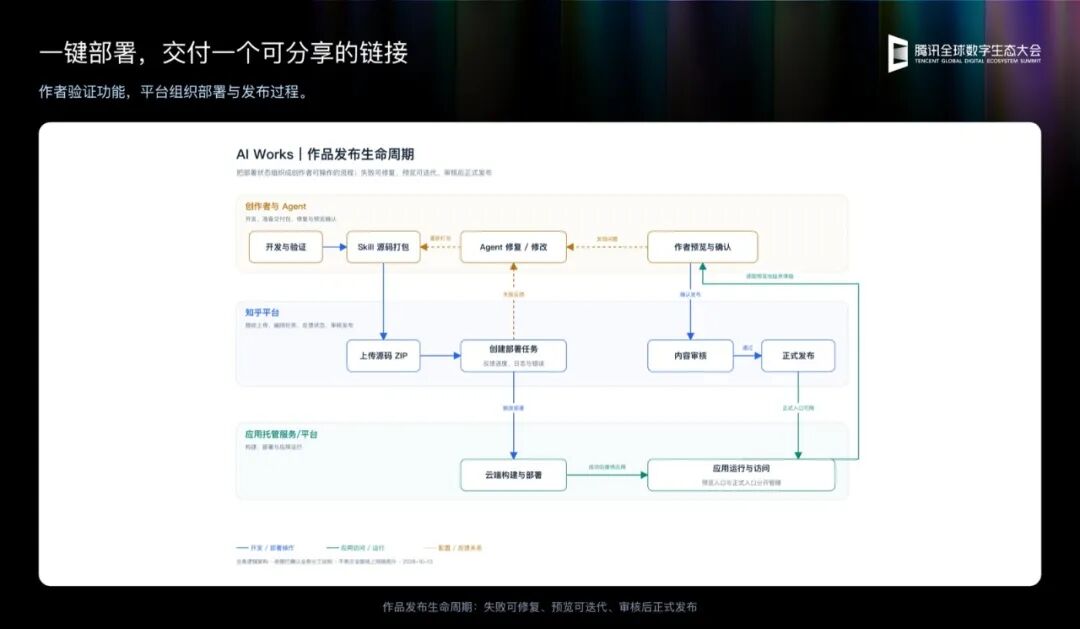
Creators only need to validate functionality. The hosting foundation organizes the runtime environment, build orchestration and publishing entry point.
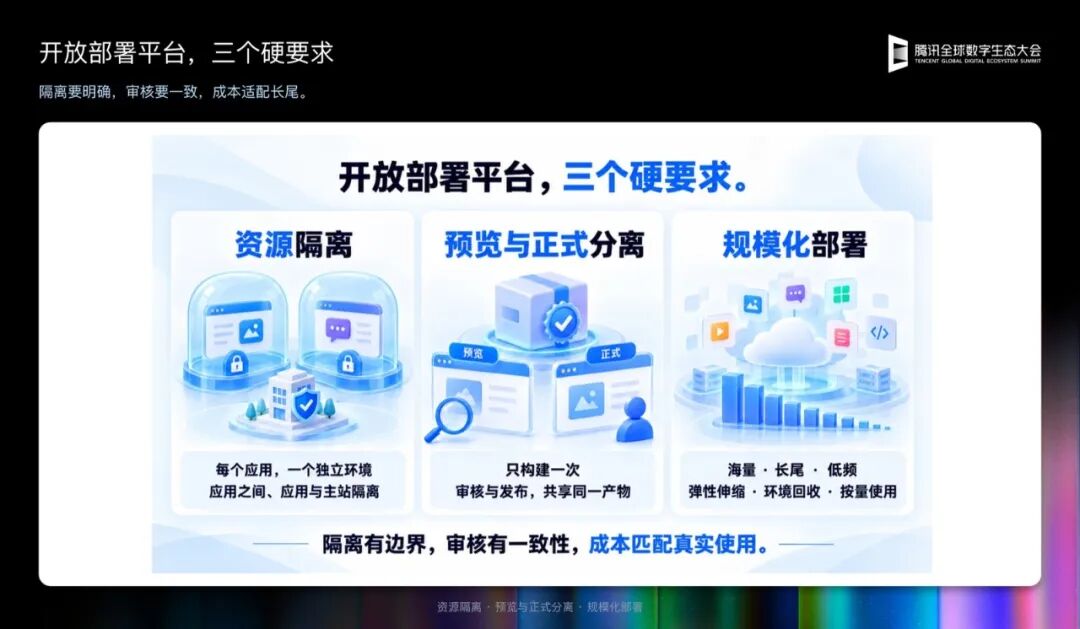
To make one-click deployment a public platform service for code uploaded by strangers, the engineering has to satisfy three requirements: resource isolation, separation of preview and production entry points, and a cost profile that fits a long tail of low-traffic apps.
Engineering choices behind the hosting platform
Reusing the main site's existing R&D deployment service would have made identity adaptation and isolation too costly to retrofit. Building a complete K8s runtime sandbox and CI/CD pipeline from scratch would require heavy upfront investment and long-term maintenance.
Zhihu chose to call CloudBase through APIs, handing generic environment management, build hosting and runtime elasticity to the cloud foundation while keeping contract definition, business orchestration, security review and traffic governance in-house.
CloudBase's isolated environments and compute elasticity fit the need to host a large number of low-frequency apps.
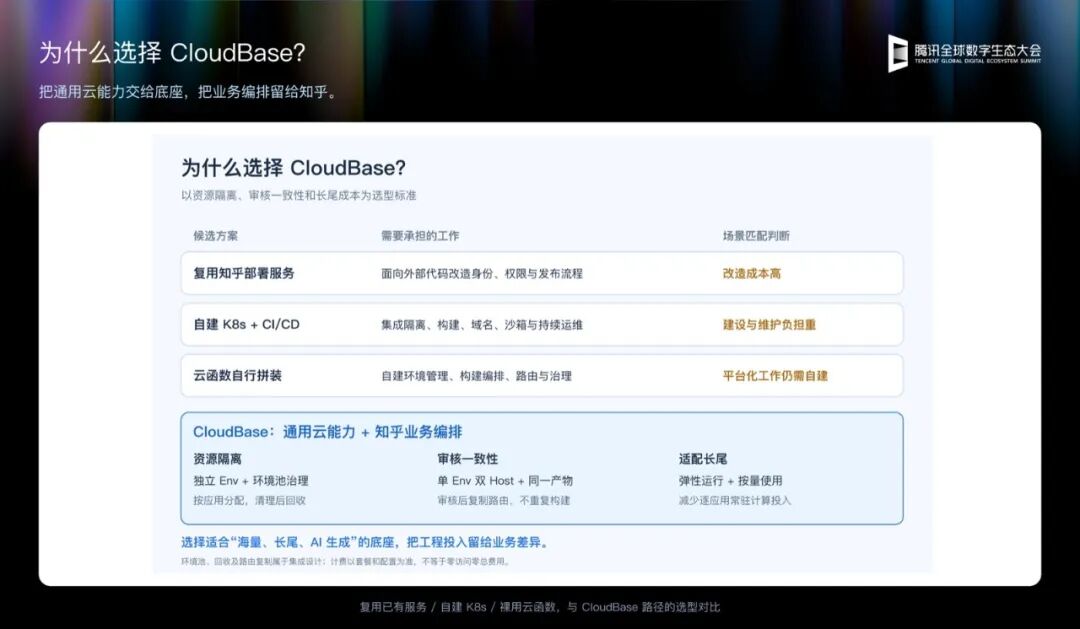
Contract-based fully managed deployment in practice
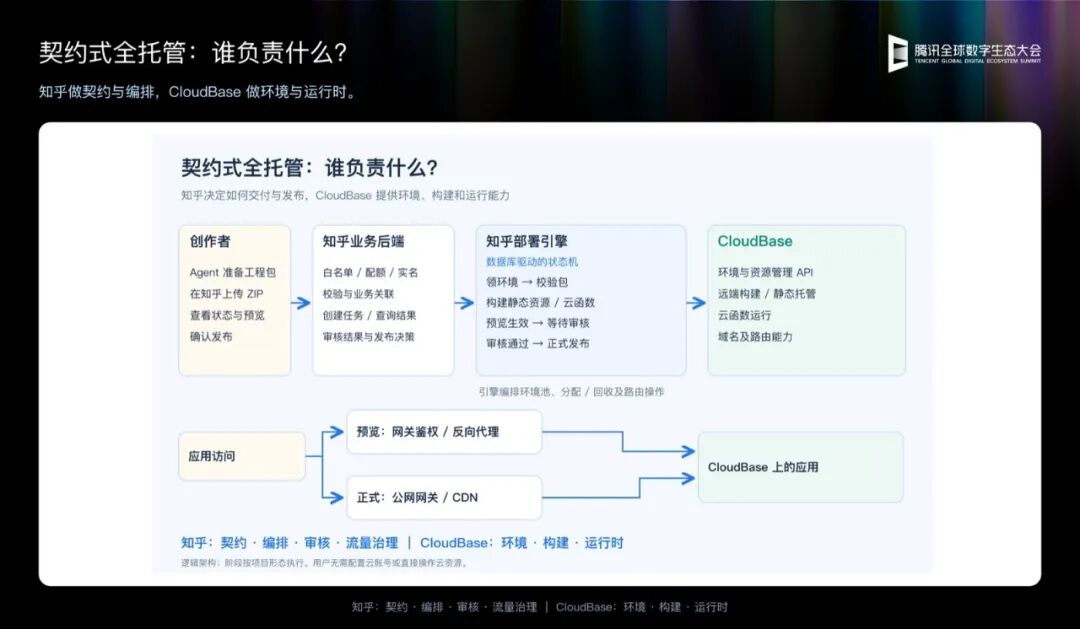
After frontend business validation, Zhihu's deployment engine advances a state machine through environment pool allocation, package validation, remote build, preview activation and release review. In this "contract-based fully managed" design, CloudBase handles environments, builds, hosting and runtime, while Zhihu keeps orchestration and control over how those capabilities are used.
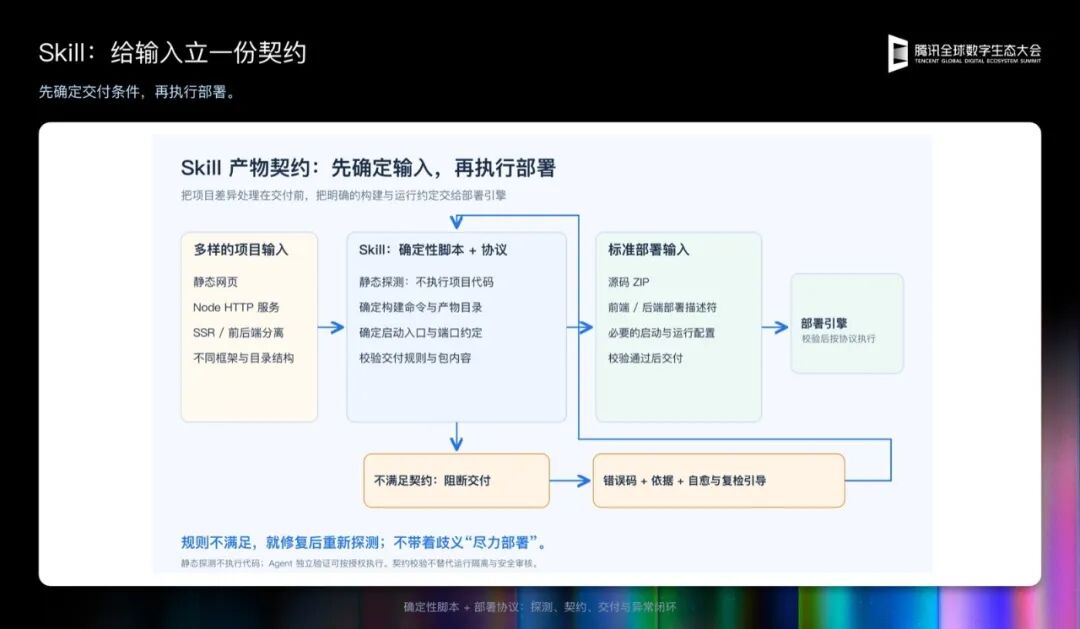
To give AI-generated code from strangers deterministic deployment inputs, Zhihu combines static detection with a deployment protocol inside the project directory. Without executing any project code, the static stage reads the file structure, identifies framework characteristics, build commands and startup entry points, and produces a standard deployment descriptor.
Projects that violate port or startup conventions are blocked immediately with remediation guidance, so only contract-complete packages reach the build stage.
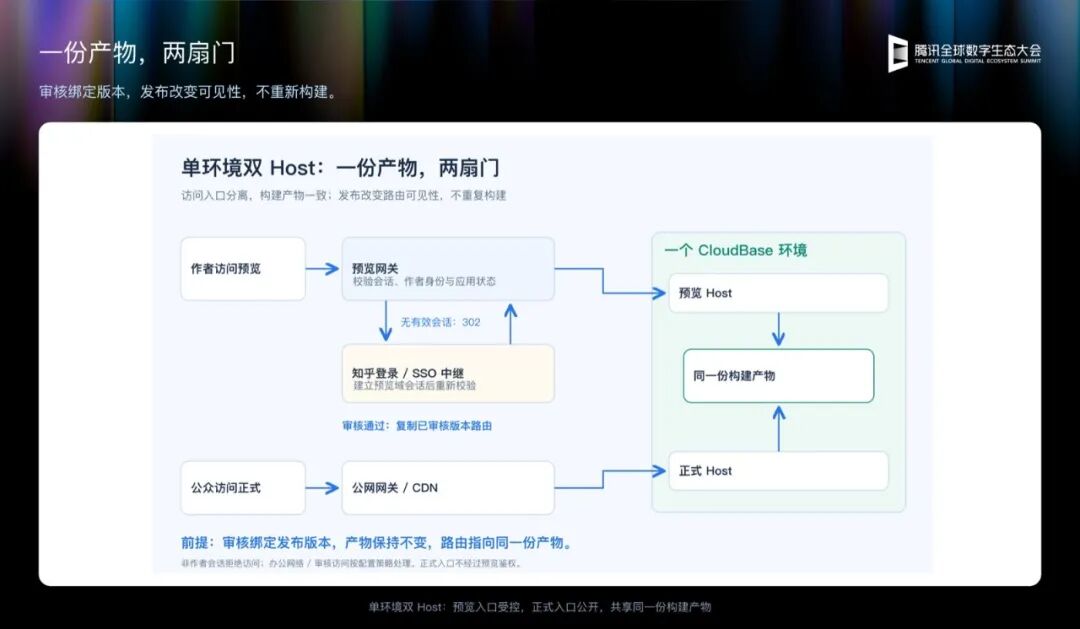
To guarantee that "the approved version is the released version," Zhihu uses a single-environment, dual-host design. Each app gets one CloudBase environment, with both the preview domain and the production domain pointing at the same immutable build artifact.
Publishing only copies the corresponding route configuration — there is no second build — eliminating inconsistencies caused by environment differences. All preview requests also pass through Zhihu's preview gateway for strong authentication and session validation, keeping unpublished pages under control.
An authorized, open model for internal product and operations teams
Beyond the fully managed AI Works for external creators, Zhihu's internal product and operations teams also need many Web apps: campaign pages, dashboards and lightweight tools.
With AI IDEs, operations staff can already write code, but turning a page into a reliably running business app still runs into hard-to-discover internal APIs, difficult data schema design and authentication rules that are hard to enforce.
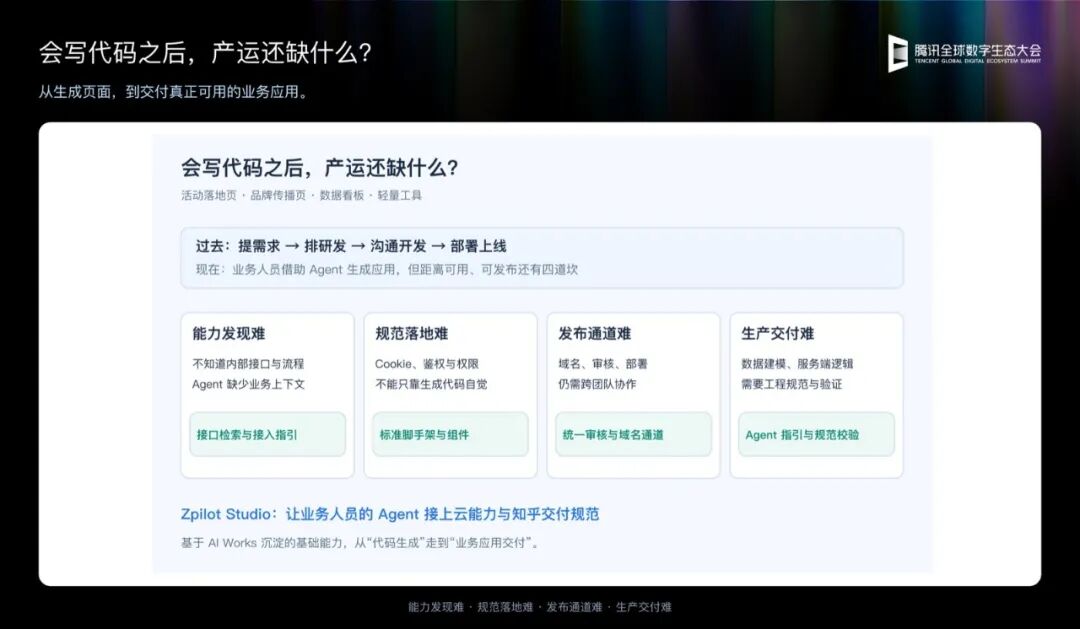
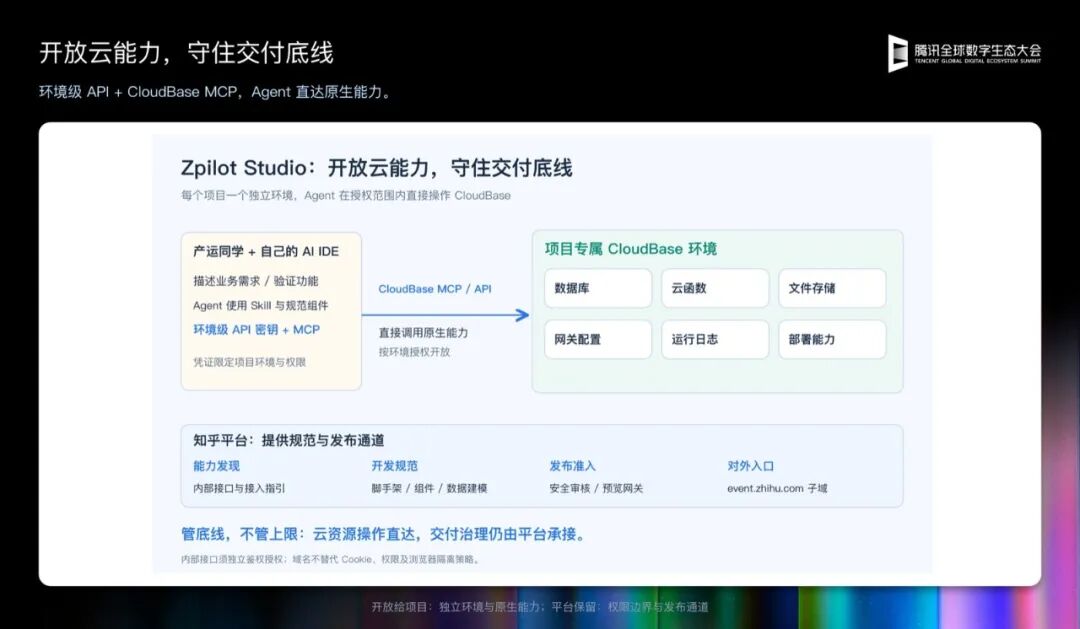
For this scenario, Zhihu built Zpilot Studio. Instead of full management, it opens CloudBase's native capabilities to operations staff within authorized project boundaries.
The system assigns each internal project its own CloudBase environment and API key, so an AI IDE can call the database, cloud functions and file storage directly through CloudBase MCP.
On this path, Zhihu provides baseline rules and release gates. Scaffolds embed security conventions and base components; security review and the event.zhihu.com domain channel guard the release step. Engineering standards and release admission are enforced by concrete mechanisms.
A shared engineering core: constraining AI output with deterministic contracts
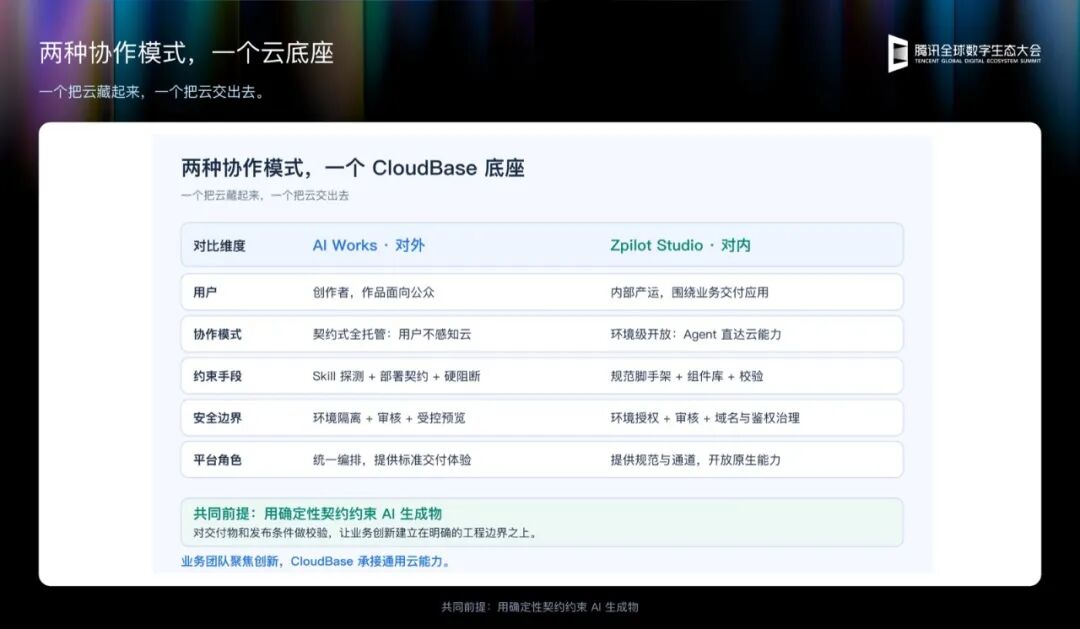
The managed model for creators and the open model for internal teams share the same technical foundation and engineering principles.
Both require deterministic contracts and conventions to constrain the uncertain code AI produces. The deployment descriptor detection on the external side, and the standardized scaffolds and security boundaries on the internal side, both exist to unlock software productivity while keeping delivery reliable.
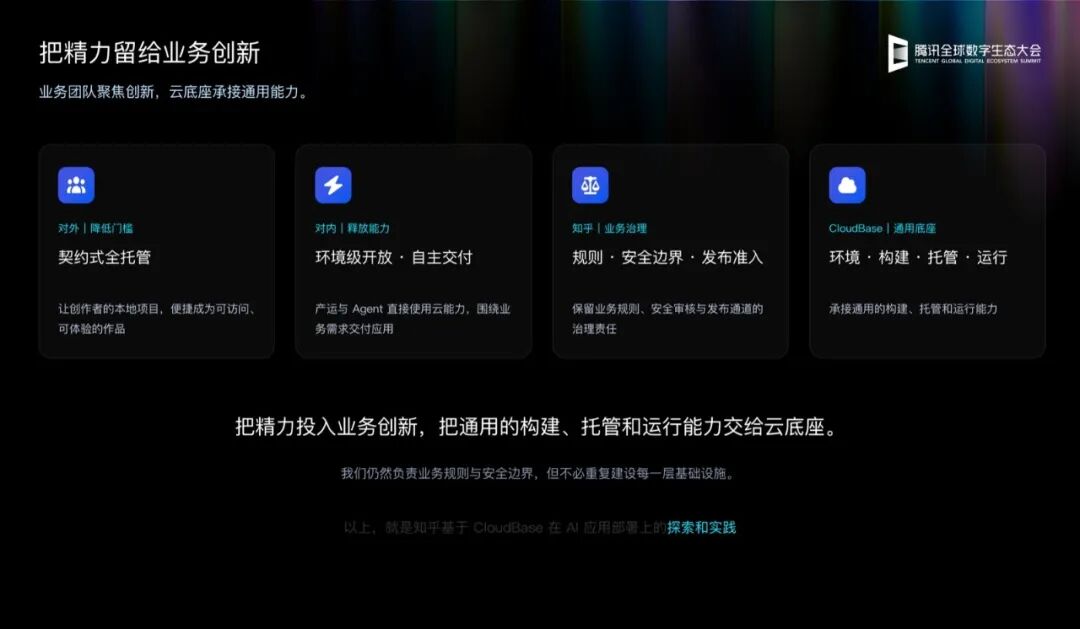
Once generic remote builds, environment hosting and compute elasticity are handed to CloudBase, business teams can stop rebuilding infrastructure and focus on higher-value engineering.
About CloudBase
CloudBase is Tencent Cloud's AI-native all-in-one backend platform, providing cloud functions, cloud database, static hosting, object storage and environment isolation, with MCP support that puts cloud capabilities directly in the hands of AI Agents. From independent developers to large platforms like Zhihu, it can carry the full backend chain from build and hosting to runtime. If any of these scenarios is what you are building — or considering — get in touch.
All illustrations in this article come from the Zhihu AI Works team's presentation at the Tencent Cloud Ecosystem Conference creator session.
More case studies: Tens of thousands of new apps a day: why agents pick CloudBase